During this week’s class we had an informal critiquing session, in which we all took turns explaining our journey and experiments so far and where we’d like to take them in the near future.
As mentioned in the previous blog, I had multiple ideas but I could not decide which to actually do, so I decided to present my statements and my research to my team and get their help in brainstorming and progressing my project.
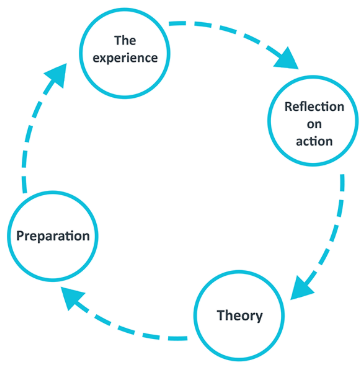
Similar to last week, I will be using the Integrated Reflective Cycle model (Bassot, 2013) to help guide and allow me to explain and articulate how I felt and what knowledge and insight I gained from the experience.
So after explaining all my ideas and all my findings, I asked which they thought would be the best idea to move forward with. Surprisingly they collectively thought that the “I want to explore localised recycling systems by mapping out the journey of my own weekly waste to better understand gaps or inefficiencies in my community’s recycling infrastructure.” was the most interesting one for me to pursue.
So we sat down and flow charted this idea to see if we can come up with something that I could experiment with over the next week.
Maybe you could consider how much a person recycles a week?
|
Hmm, yeah that would be interesting, but how would I track it?
|
Perhaps we could consider how much of it they actually don’t recycle when they should be?
|
Maybe you could show how much of their recycling ends up in landfill?
|
You could potentially just use the average, I’m sure there’s a whole bunch of research done on the topic, perhaps you could just use those?
|
Yeah, I like that, but how would I show it?
|
Perhaps an app?
|
Or an VR or AR world so they could be more immersed in the world?
|
Who should have access to it?
|
I don’t know but I think that’s a good start.
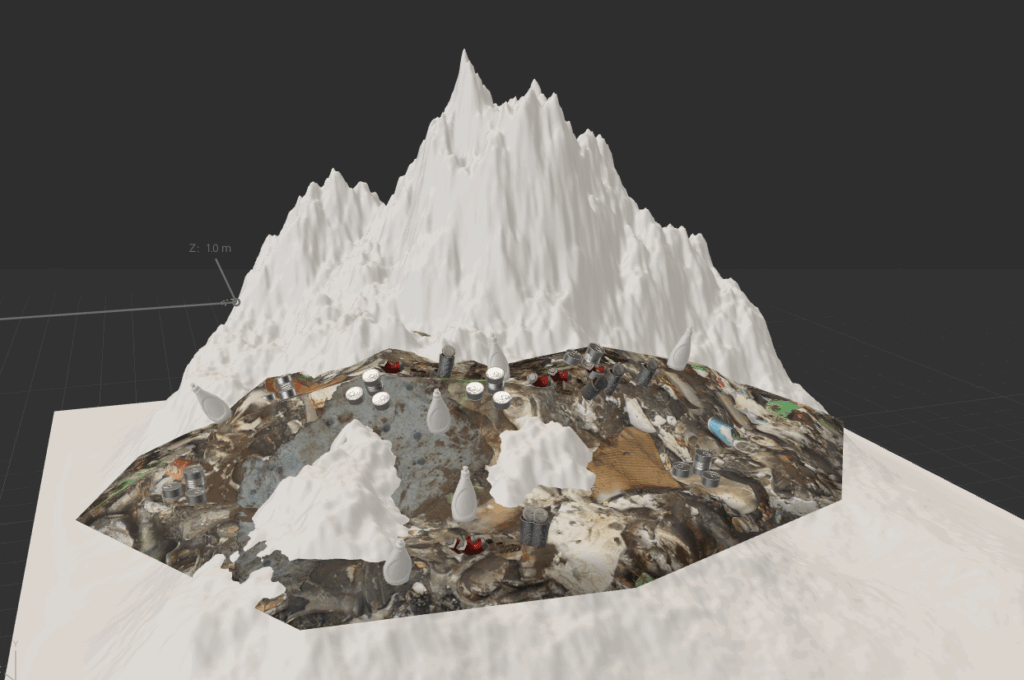
I deliberated over the next few days and decided that while I do some research I should also create a quick AR space in Adobe Aero to visualise a mock up of what the space would look like. I had decided to continue researching to see whether AR and recycling were even a good match but I also wanted some visual aids to help me come to a decision.
I focused my research to talk about the uses of AR and if it even is a viable or useful option for me to experiment with and use to get my message across.
Augmented Reality or AR for short overlays digital elements, whether it’d be animations of images or data onto the real world by using tech devices such as AR glasses or tablets and smartphones (Sarvaiya, 2023). There have been many different examples of AR used in more common areas, such as retail and shopping to allow users to try the products or see how an item fits in their space prior to purchasing. Gaming in applications such as Pokémon Go. Virtual Meetings to allow for more engaging remote communications among many other things (Sarvaiya, 2023).
All of this shows that using AR as a tool to spread a message or introduce a concept or educate the public is quite feasible.
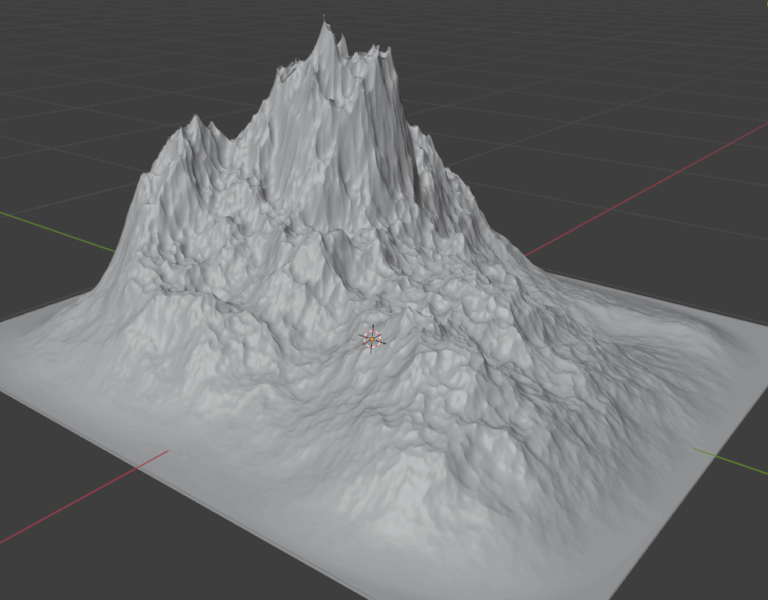
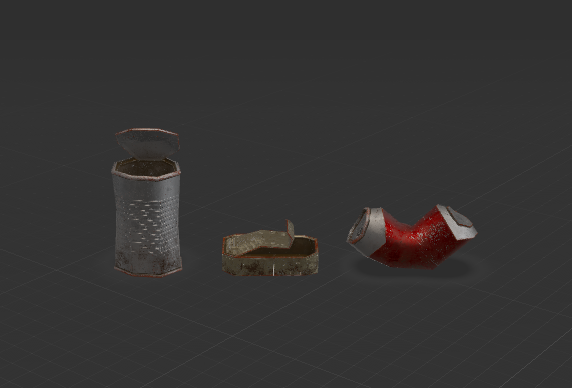
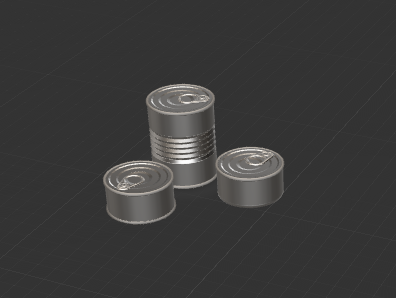
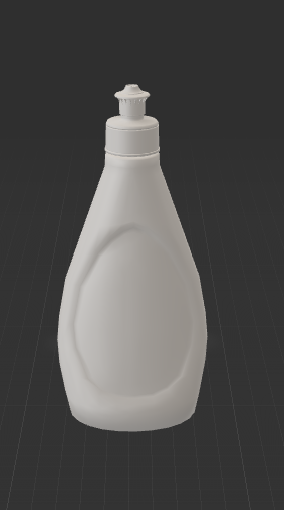
I was quite happy with the direction that my project had started working towards, so I wanted to keep working on it. At this stage because I still am not completely sure of the direction I wanted to take for the general scope of my project, I decided to use free blender models I found online, deciding that if later on, I committed to the project then i would spend some time making them from scratch.
This made my job a lot easier especially since my goal for this mock up was simply to visualise how it could potentially look.
Adobe Aero mock up:
I wanted to showcase all the little bits of recycling that end up in the landfill instead of the proper recycling sites. This led me down a path to consider what other countries do for their recycling and how they ensure higher rates of recycling ending up in the proper bins. I plan on showing my research and my findings for the crit session next week, along with the mock and get some further feedback on it.
Whilst I do not want my final to look like this if I continue down this path, I believe that this was a good starting point for this experiment.