This week was relatively straightforward, but also a little stressful. Even though we had done a similar crit the week before, I felt a lot more stressed this time because it was an official critique.
Prior to the lecture and as mentioned in the previous week’s blog, I wanted to spend some time researching how New Zealand is approaching recycling / cross contamination and also which countries have the best recycling rates and what systems do they have that have allowed them to succeed with such a high rate.
From my research I have found that New Zealand faces several issues within its waste and recycling management systems, which lead to environmental and operational concerns. A significant issue is the contamination of recyclable materials. In 2024, a report by the Waste and Recycling Industry Forum revealed that approximately 17% of items collected for recycling were diverted to landfills due to contamination. This contamination often results from improper rinsing of recyclables or the inclusion of non-recyclable items in recycling bins. Such practices not only increase landfill waste but also elevate processing costs and environmental impacts (Prasad, 2024).
The waste sector is a notable contributor to New Zealand’s greenhouse gas emissions. In 2022, it accounted for an estimated 3.5 million tonnes of CO₂-equivalent, representing about 4.5% of the nation’s total emissions. A significant portion of these emissions, 93.3%, was methane, which is a potent greenhouse gas and is primarily produced by the decomposition of organic waste in landfills (Ministry for the Environment, 2024).
New Zealand’s recycling infrastructure lags behind comparable countries. In 2020, the country faced an estimated infrastructure deficit of $2.1-$2.6 billion, with additional service funding needs of about $0.9 billion. By 2024, industry estimates suggested this deficit had grown to $4 billion. This shortfall hampers the nation’s ability to process and recycle materials effectively, leading to increased reliance on landfills and the export of recyclable materials (Ministry for the Environment, 2024).
Public uncertainty about recyclable materials contributes to contamination. For instance, many are unaware that certain items, like cottage cheese and sour cream containers, are non-recyclable. This confusion leads to improper disposal, further complicating recycling efforts (Wetzell, 2023). Addressing these issues requires enhanced public education on proper recycling practices, significant investment in recycling infrastructure, and stringent policies to reduce contamination and manage waste more sustainably.
Compared to countries with more successful recycling systems and what we can learn from them.
Germany:
- Recycling rate – around 67% (which is the highest in the world)
- System: Multi bin recycling, mandatory sorting, strict producer responsibility laws,
- What causes this success:
- Green dot system – Producers pay for packaging waste, incentivising sustainable design,
- Public education – From a young age people living there are educated on waste separation.
- Clear labelling – packaging includes disposal instructions.
Sweden:
- Recycling rate – around 50% with the rest being turned into energy
- System: Advanced sorting, waste to energy (by incineration), deposit schemes for bottles and cans.
- What causes this success:
- Incineration plants that generate energy from not recyclable waste
- Deposit return schemes – consumers get money back for return beverage containers
South Korea:
- Recycling rate – around 59%
- System:.Pay as you throw (people pay for the waste they generate), strict food waste separation and multitude of bins for different recycling materials
- What causes this success:
- RFID food bins in apartments track food waste by weight, charging users accordingly
- High tech recycling plants
- Severe fines for improper disposal
- Strict disposal rules
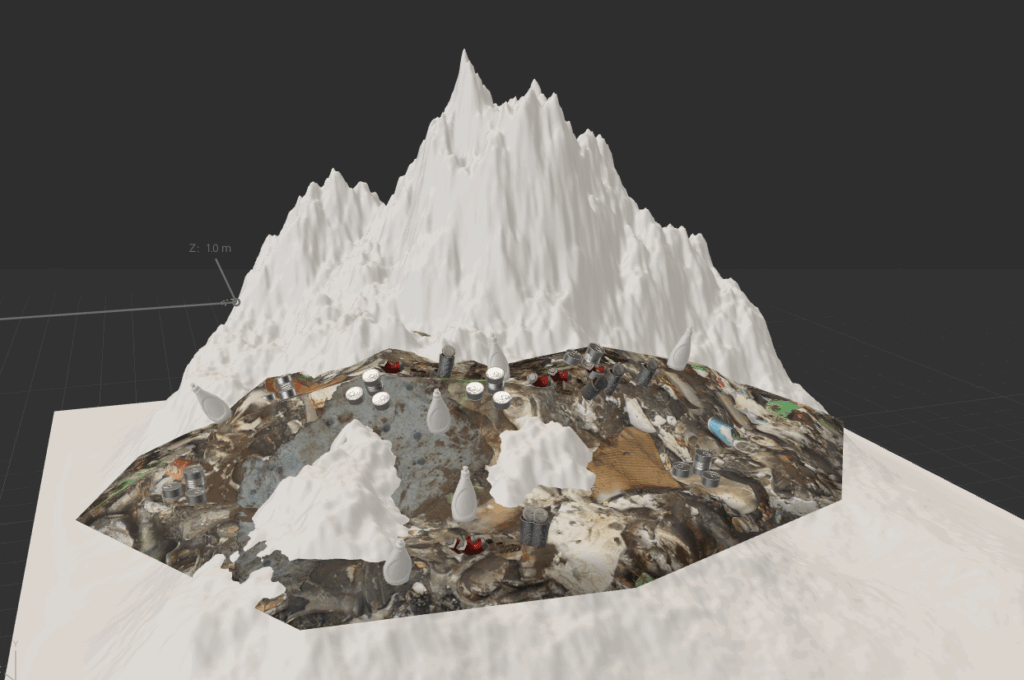
During the critique session I presented this information to my team and received some feedback as well as showing them the simulation of the AR world I had created on Adobe Aero.
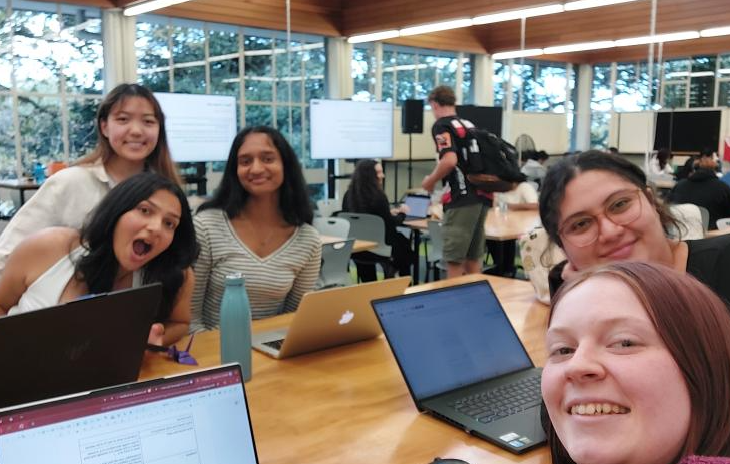
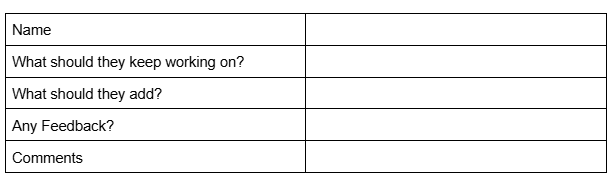
For our crit session our team chose to go for a google doc table that the entire team had access to and would fill out as one of us was presenting.
During my crit session we continued brainstorming and after a little deliberation realised that since my target audience would be the general public, if I wanted to manage to show the actual impact of recycling, they would need to download a different software or app to be able to run the program, which would discourage a lot of the audience.
Which is why we considered an app that allowed you to scan a barcode for example and to be told exactly how to recycle it and exactly how to recycle it, perhaps creating a reward system to incentivise users.
The details need to be ironed out, of course, but I like the general concept as of this moment.
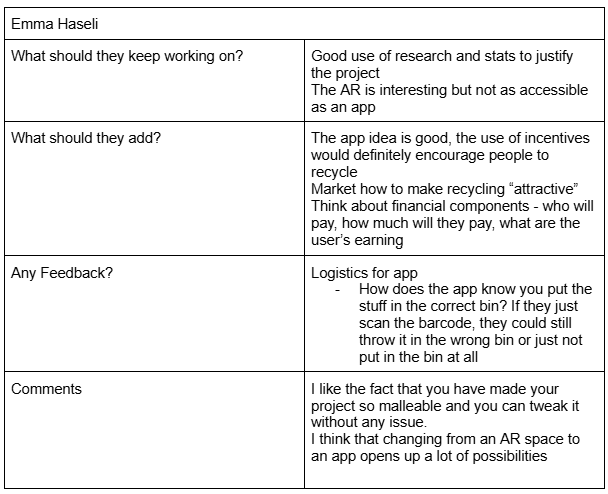
Future steps:
My future steps would include doing some research into similar apps, as well as ironing out some details about how the application would work as well as perhaps creating a prototype using Figma or something similar to get an idea of how the app would look.
All in all, I believe that it was a very productive crit session and allowed me to not only get a better sense of my project but to also pivot while feeling supported and seeing that others also agree with the change as well.
References:
Earth.Org. (2021, February 26). How South Korea became an example of how to recycle food waste. https://earth.org/food-waste-south-korea/
El-Saghir, J. (2025, January 20). Recycling in Germany – Comprehensive Guide to Waste Management. How To Germany. https://www.how-to-germany.com/recycling-in-germany/
Prasad, I. (2024, May 19). Report Says 17% of items at recycling facilities end up in landfills. 1news. Retrieved April 5, 2025, from https://www.1news.co.nz/2024/05/19/report-says-17-of-items-at-recycling-facilities-end-up-in-landfills/
Swedish Institute. (2025, January 24). Swedish recycling and beyond. Sweden.se. https://sweden.se/climate/sustainability/swedish-recycling-and-beyond
New Zealand Government (2024, May 8). Ngā tukunga rāngai para | Waste sector emissions |. Ministry for the Environment. Retrieved April 5, 2025, from https://environment.govt.nz/facts-and-science/waste/waste-sector-emissions/
New Zealand Government (2024, December 11). Sector policies and plans | Ngā kaupapahere me ngā mahere o te rāngai |. Ministry for the Environment. Retrieved April 5, 2025, from https://environment.govt.nz/publications/new-zealands-second-emissions-reduction-plan/sector-policies-and-plans/
Wetzell, P. (2023, October 17). Too much recycling going to landfill, too much waste going to recycling. 1news. Retrieved April 5, 2025, from https://www.1news.co.nz/2023/10/17/too-much-recycling-going-to-landfill-too-much-waste-going-to-recycling/